Measure A Programs
Measure A is the sales tax San Mateo County voters approved to fund local transportation — and the TA's job is turning that tax revenue into improved transportation services, safer streets, and less congestion.
Voters passed it in 1988 with 61.7% support and reauthorized it in 2004 with an even stronger 75.3%. The reauthorized measure took effect in 2009, expanding funding to cover local community shuttle service, railroad and street grade separations, ferry service connecting South San Francisco and Redwood City, and a major increase in dollars for pedestrian and bicycle projects.
Two voter-approved expenditure plans govern exactly how that money is spent — setting the goals, guidelines, and requirements for each program, and dividing the revenue across categories by percentage.
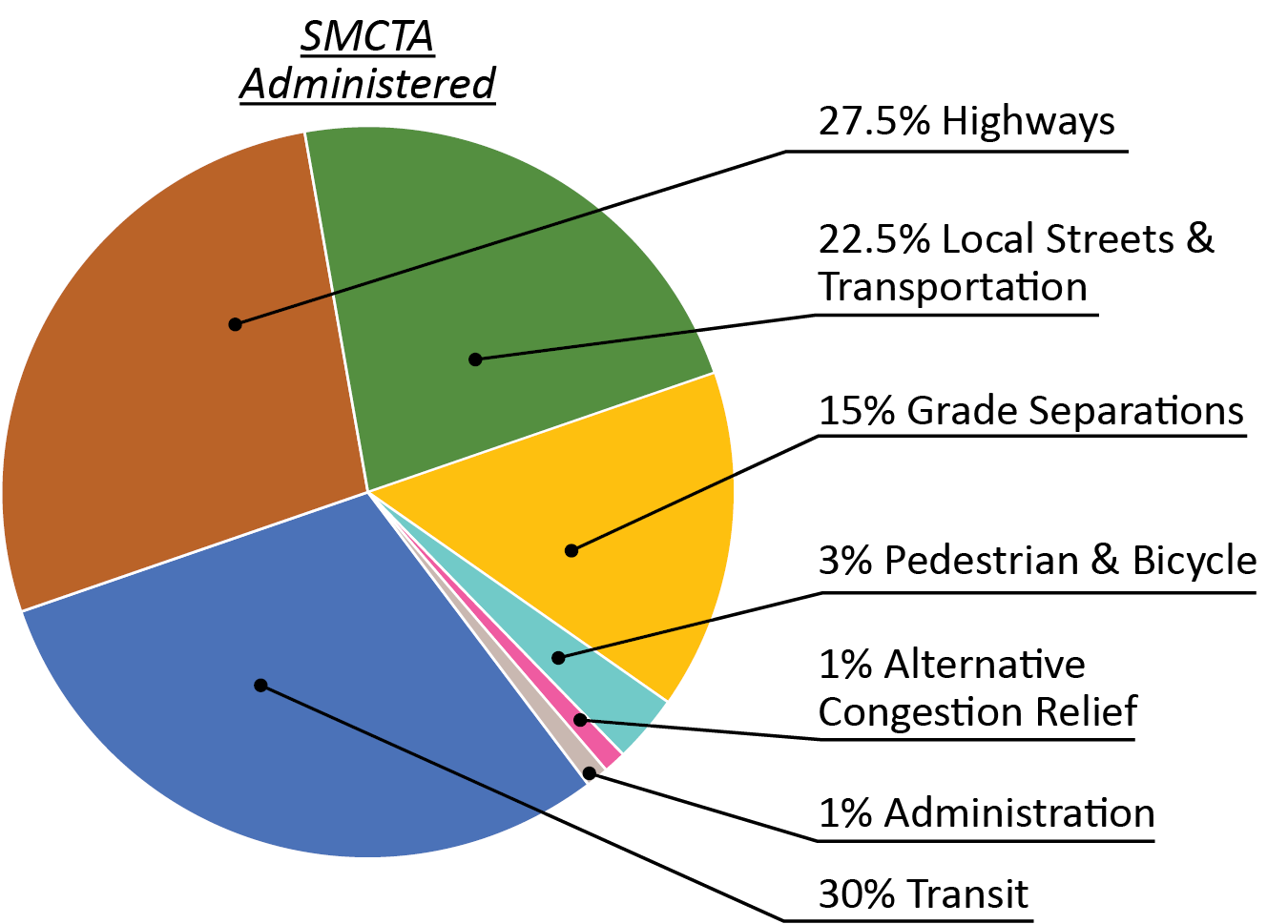
Measure W Programs
Measure W, approved by San Mateo County voters in 2018, will generate additional funds from another half-cent sales tax authorized for a period of 30 years beginning July 2019 and ending June 30, 2038. Measure W contains the Congestion Relief Plan which establishes five Investment Categories for these funds: Highway/Interchange, Local Safety/Pothole, Bicycle/Pedestrian, Regional Connections, and Public Transit.
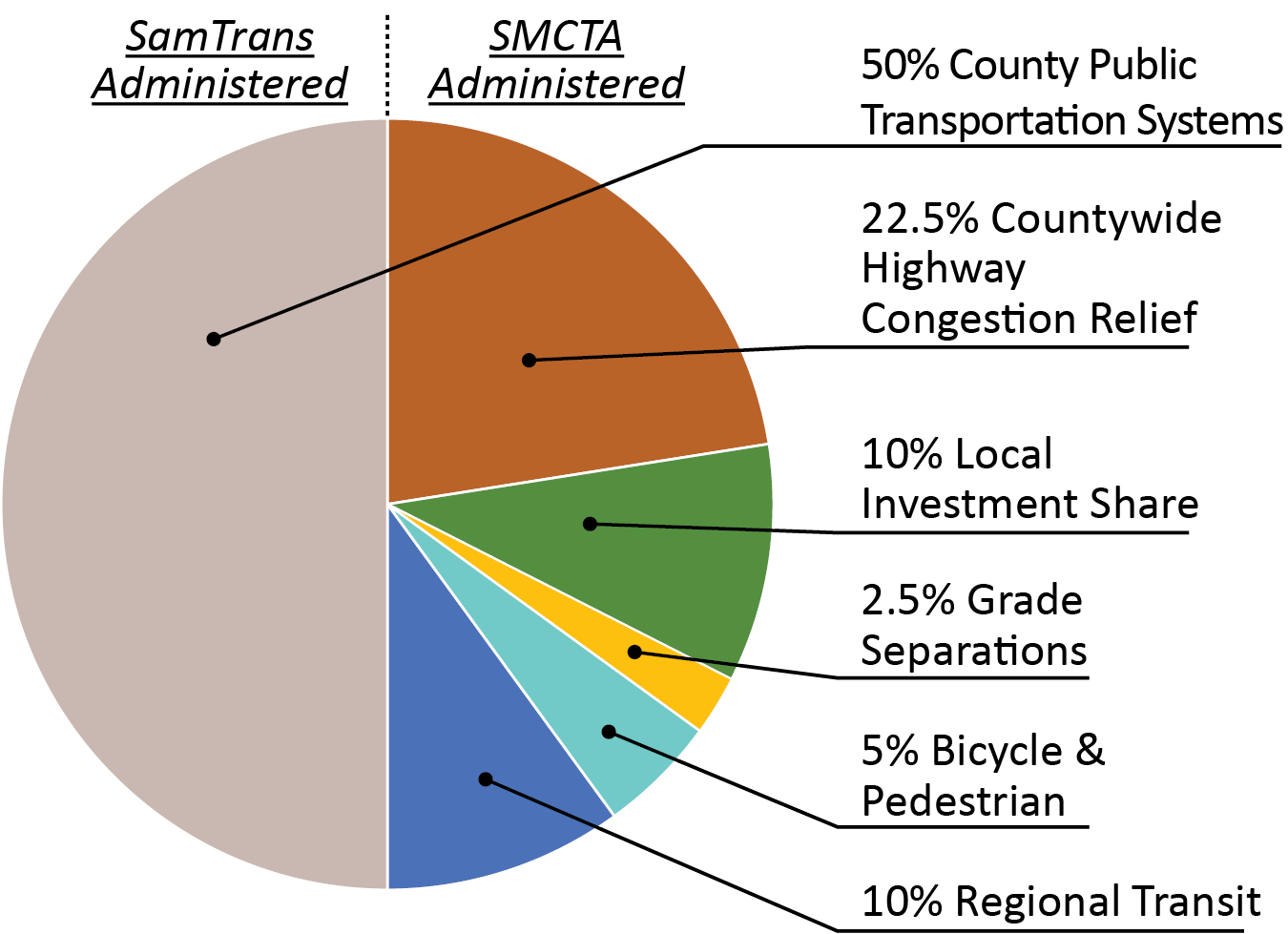
Measure W contains 11 Core Principles to guide program implementation where applicable:
- Relieve traffic congestion countywide
- Invest in a financially sustainable public transportation system that increases ridership, embraces innovation, creates more transportation choices, improves travel experience, and provides quality, affordable transit options for youth, seniors, people with disabilities, and people with lower incomes
- Implement environmentally-friendly transportation solutions and projects that incorporate green stormwater infrastructure and plan for climate change
- Promote economic vitality, economic development, and the creation of quality jobs
- Maximize opportunities to leverage investment and services from public and private partners
- Enhance safety and public health
- Invest in repair and maintenance of existing and future infrastructure
- Facilitate the reduction of vehicle miles traveled, travel times and greenhouse gas emissions
- Incorporate the inclusion and implementation of complete street policies and other strategies that encourage safe accommodation of all people using the roads, regardless of mode of travel
- Incentivize transit, bicycle, pedestrian, carpooling and other shared-ride options over driving alone
- Maximize traffic reduction potential associated with the creation of housing in high-quality transit corridors